
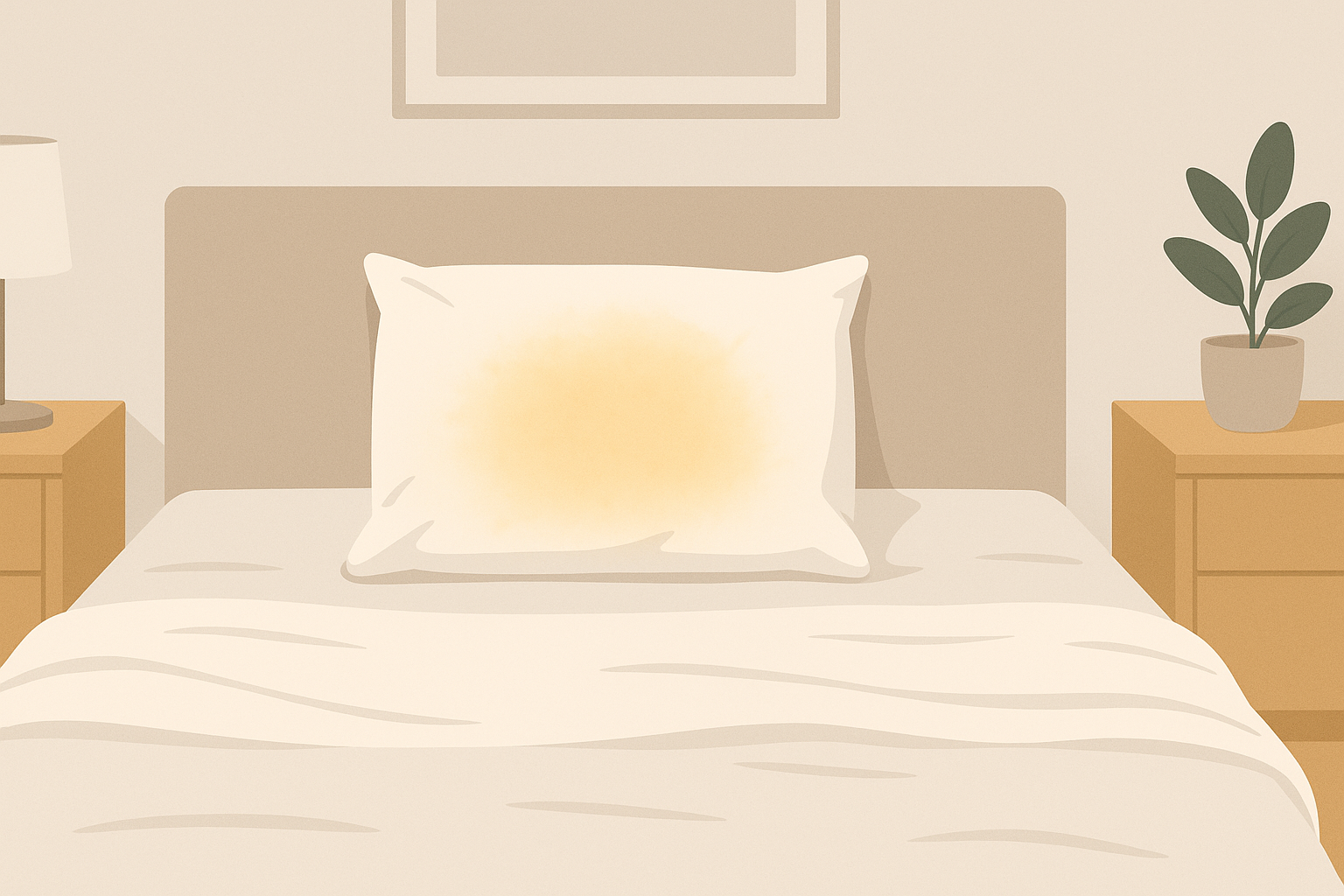
Pillows turn yellow mainly because moisture from sweat, body oils, saliva, and hair products seeps through the pillowcase and into the pillow’s filling. The natural yellowing of the pillow is not just a sign of age; it happens because of contact with different bodily fluids and substances every night that slowly stain the inside of the pillow. If you know what causes pillow discoloration, you can take the necessary steps to help maintain a cleaner, healthier sleeping environment.
The Main Culprits Behind Yellow Stains
What causes the yellow discolouration on pillows? According to the Sleep Foundation, pillows start to turn yellow due to things like sweat, drool, wet hair, and even skincare products accumulating so they leave yellow stains. Sweat is the most common cause, since the average person can lose up to a liter of water through sweating at night. Your body naturally sweats to keep your temperature stable, even if you don’t know it. Over time, this moisture seeps into your pillow, leaving yellow stains that get worse with use.
Body oils produced by your sebaceous glands also play a part in pillow yellowing. These glands produce sebum, which is really important to skin and hair health. But when these glands are too active and make your skin or hair oily, the extra oil soaks into your pillow and makes it yellow. These oils and dust mix with dead skin cells that naturally fall off every night and build up in your pillow, making it look dirty over time.
Saliva and drooling while you sleep also leave yellow stains, as moisture from drooling can penetrate the pillowcase and reach the pillow itself. Saliva has proteins and enzymes in it that can cause yellowing over time, which makes it a big cause of staining. Also, going to bed with wet or damp hair adds extra moisture to your pillow, which can not only make it yellow but also promote the growth of bacteria and fungi that make your hair smell bad.
Skincare products, lotions, and face creams applied before bed you go to bed usually don’t have enough time to fully absorb into your skin. These unabsorbed beauty products can seep into your pillow and contribute to discolouration and stains, especially if your nighttime skincare routine is on the long side.
Why Yellow Pillows Are More Than Just Unsightly
The yellow stains on pillows aren’t just ugly; they can also harbour bacteria and allergens that can affect sleep quality and health. Dust mites, mildew, and other allergens can build up in pillows over time, especially those that are very damp. These buildups can cause allergic reactions that make it hard to sleep. Sweat, oil, and dead skin cells can also clog pores and make your skin break out.
Moisture and humidity inside your home along with the temperature you keep your thermostat at while sleeping, can have a big impact on how long your bedding lasts. Moisture and humidity can ruin the filling in pillows, making them lose their loft and support. At the same time, they can also leave yellow stains on both the pillowcases and the pillows.
How to Prevent Pillows From Turning Yellow
Prevention is far easier than trying to remove those ugly yellow stains once they’ve set in. One of the best ways to keep stains from getting on your pillows is to use pillow protectors. These covers are sealed and can be washed, so they keep stains from getting on your pillows. Pillow protectors keep sweat, saliva, and oils from getting into the pillow, which keeps it fresher for a lot longer.
How often should pillows be washed? The cleaning experts over at Ideal Home say that pillows should be washed every three to six months. However, more frequent washing is recommended for those with allergies or asthma, so about every three months. Regular maintenance helps prevent stains from becoming deeply set and reduces allergen build-up.
It’s important to wash your pillowcases at least once a week because they touch your skin directly and can keep oils and sweat from getting into the pillow. Many pillows can be washed in the washing machine. To get rid of oils, sweat, and dust that have built up over time, check the care label and wash them often. When you wash pillows at home, use a detergent that doesn’t have any enzymes in it and only about a third of the usual amount. Then, dry them completely in a tumble dryer. You might have to go to a laundrette to use a washer or dryer with a lot of space if your machine isn’t big enough.
Another way to stop mold and mildew from growing is to not go to bed with wet or damp hair, as this adds extra moisture. Using a silk hair wrap and drying your hair all the way before bed can keep your hair and pillows from getting frizzy and getting damaged. Taking off your makeup and giving your skincare products enough time to soak in before you go to bed can also help keep them from getting on your pillow.
Maintaining a Clean Sleep Environment
Keeping your sleeping area clean helps extends the life of your pillow. Regularly washing sheets and pillowcases, showering before bed, and keeping your bedroom dust-free all help maintain cleaner pillows. Pillowcases that are made better are more likely to keep moisture away from your pillow and slow down the yellowing process.
Most memory foam pillows that can’t be washed in a machine have removable covers that can be cleaned for yellow stains just like regular pillows. If yellow stains have spread to the foam, sprinkling the stained area with baking soda, leaving it for a couple of hours, and then vacuuming with an upholstery attachment can remove stains and destroy lingering odours.
When to Replace Your Pillows
Even with regular care and cleaning, pillows don’t last forever. Replacing your pillows every one to two years or sooner if needed. If the yellow color stays after cleaning and treating the stains, or if the stains won’t come out, it might be time to buy new pillows and pillow protectors.
Keeping your pillows clean isn’t just for looks; it’s a part of sleep hygiene that affects your health as a whole. Taking care of your pillows is a simple but effective way to improve your sleep quality because a good night’s sleep affects almost every part of your health, from your brain, heart, and immune system to your mood and alertness. Knowing why pillows turn yellow and taking steps to prevent and address discolouration, you can extend the life of your pillows while maintaining a healthier and cleaner sleep environment.
Leave a Reply